MENULUX BLOG
Receipt Software Selection Guide-2026: What Should You Consider When Choosing the Best Software for Your Restaurant?
Menulux POS Systems · April 08, 2026If you run a restaurant, café, or bar, receipts are the fundamental documents of your business. The digitalization of these documents, which include details such as price, quantity, date, and type of the products and services provided, has become an integral part of modern business management. A receipt program serves as a central hub where you can manage your operations end-to-end, beyond just taking orders. Choosing the right software can increase service speed, improve operational efficiency, and minimize order errors.
In this guide, we provide a comprehensive evaluation by combining the essential features that a receipt program should have with innovative approaches in the industry.
1. User Experience and Core Functions
Restaurant robots are autonomous machines that perform specific, repetitive tasks in dining halls and service areas. They are used to support daily operations. Their task definitions are always limited to movement, delivery, and maintenance tasks that follow the same routine in every shift. Thanks to their built-in navigation and safety systems, a service robot can move autonomously in dining halls, kitchens, and service areas. You can assign clear tasks to such robots, such as carrying food, delivering materials, or cleaning floors.
How Do Restaurants Use Robots in Their Daily Operations?
User-Friendly Interface
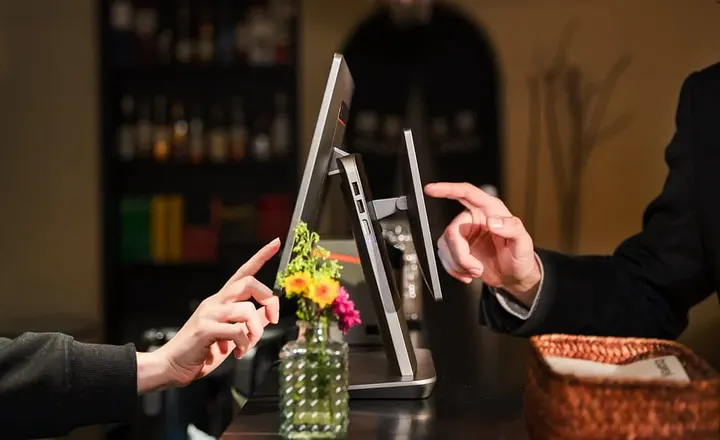
One of the most important features of a receipt program is having a user-friendly interface. Waiters must be able to quickly enter orders during busy hours and manage orders from multiple tables simultaneously. Complex menus and hard-to-understand screens slow down workflow. A well-designed program allows staff to adapt in a short time.
Thanks to mobile device support offered by modern receipt programs, waiters can take orders via tablets or smartphones and send them directly to the kitchen. This saves time and eliminates communication-related errors.
Reservation and Table Management
Receipt programs that provide a visual table layout allow waiters to instantly see which tables are available or occupied. With programs integrated with reservation systems, upcoming guests can be planned in advance and table arrangements can be organized in the most efficient way. In advanced systems, operations such as moving, merging, or splitting tables, dividing orders, and splitting bills for separate payments can be easily performed.
Multilingual and Flexible Menu Management
If your business is a frequent destination for tourists, a program with multilingual support should be preferred. This feature facilitates communication between staff and customers and ensures a smooth ordering process. Restaurant programs with a flexible structure in terms of menu management allow you to add daily menus, define seasonal products, or update prices with just a few clicks.
2. Integration Capabilities
POS and Cash Register Integration
For restaurant businesses, integration with cash register POS devices is one of the cornerstones of operational efficiency. Modern receipt programs establish seamless connections with new-generation payment recording devices (ÖKC), automating business processes.
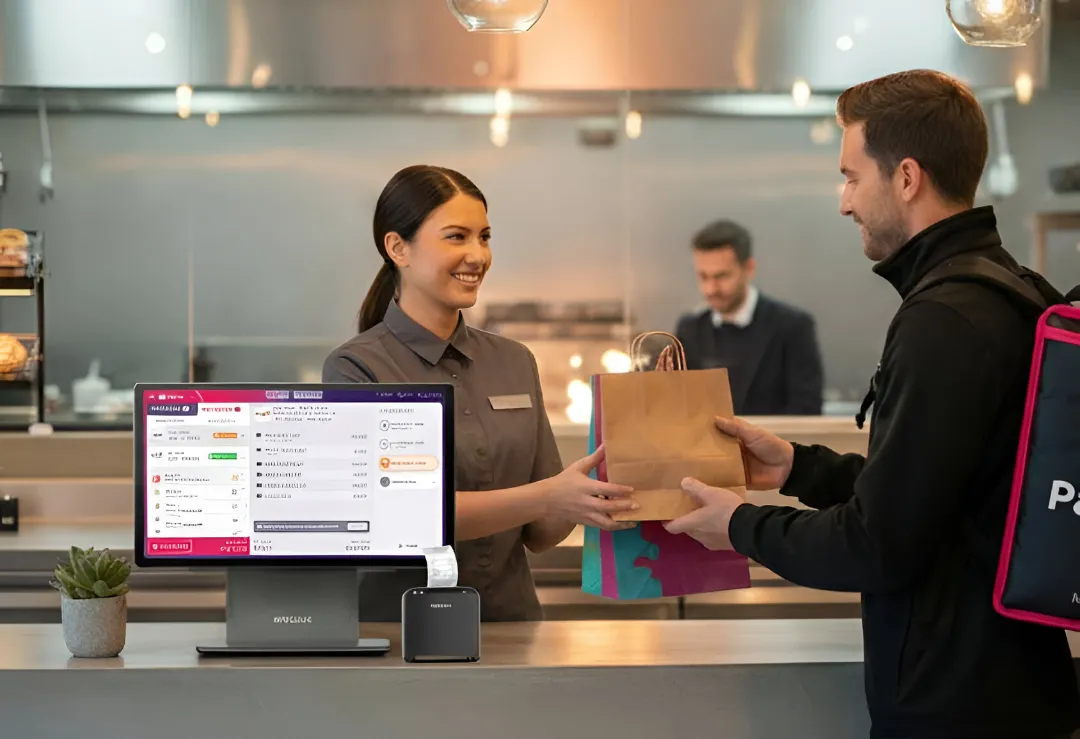
Thanks to this integration, an order entered from the waiter’s handheld terminal is directly transmitted to the cash register and communicated to the kitchen. When the customer makes a payment, the transaction is automatically recorded in the cash register. Synchronization is ensured across all processes, eliminating the risk of manual errors. A seamless experience is provided across different payment methods such as cash, credit card, or mobile payment.
Kitchen Integration (KDS)
Instant transmission of orders to digital screens or printers in the kitchen speeds up the preparation process. Kitchen staff can clearly see orders, preventing reading errors common with paper orders.
Inventory Management Integration
One of the most valuable features is the integrated operation of the restaurant program with the inventory tracking system. With each order, stock levels are automatically reduced, and alerts are generated when material levels reach critical points.
Online Food Platforms and Delivery Integration
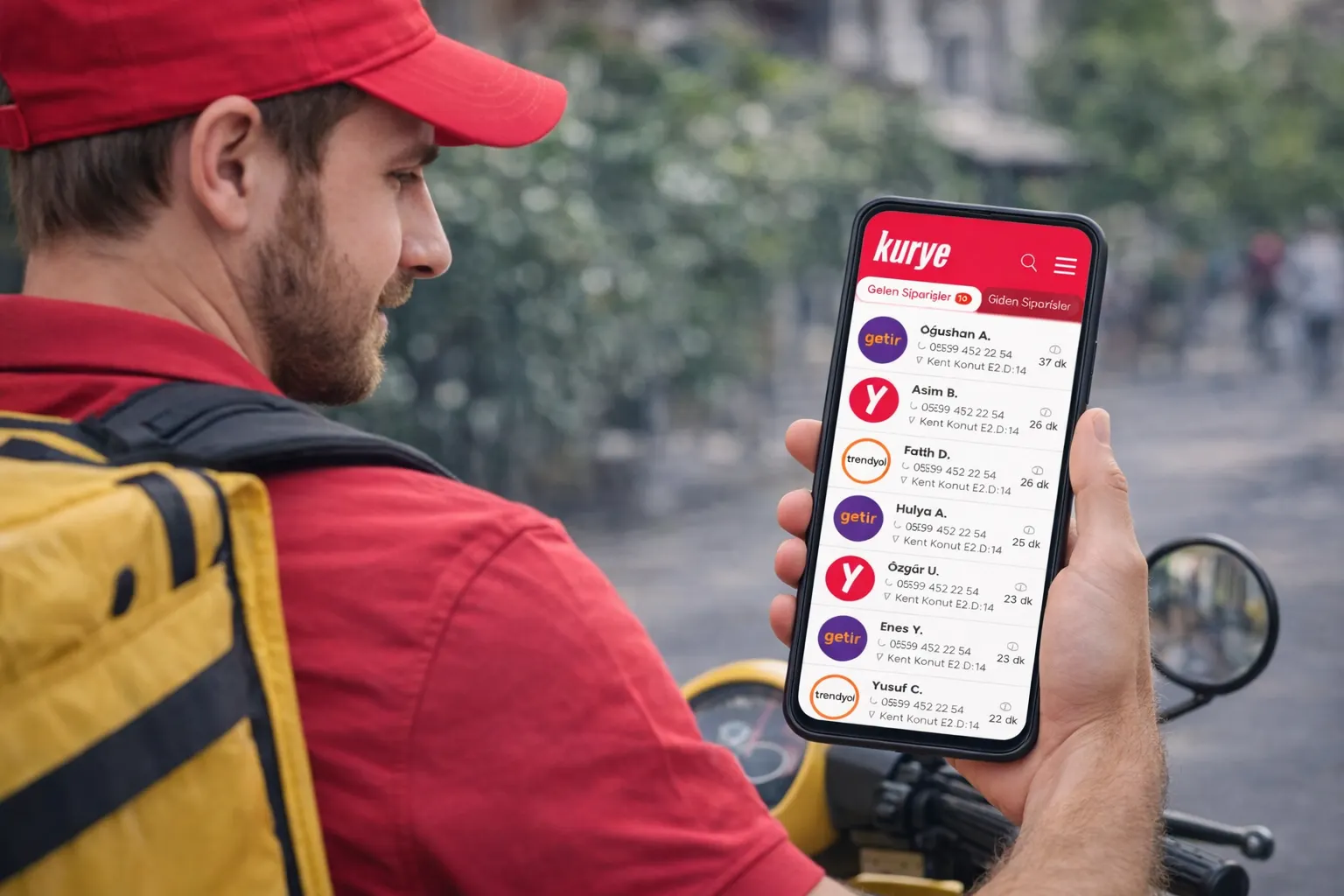
One of the biggest challenges for modern restaurants is managing orders coming from multiple channels simultaneously. Customers now place orders not only by phone but also through online platforms such as Yemeksepeti, Getir, Trendyol, and Migros Yemek.
Modern receipt programs offer full integration with these platforms, gathering all orders in a single center. Orders from online platforms are directly transferred to the receipt system, automatically sent to kitchen screens, and order statuses can be updated on platforms with a single click. Thanks to this integration, businesses save time, reduce error rates, and manage delivery operations more efficiently.
Data Transfer to Accounting Software
Proper management of financial processes in restaurant operations is critical for the healthy growth of the business. Daily sales data, POS transactions, returns, and cancellations are automatically transferred to the accounting software. The need for manual data entry is eliminated, and the risk of human error is minimized. Sales reports, cost analyses, and profitability data can be directly integrated into the accounting system.
3. Digital Order Channels
QR Menu Systems
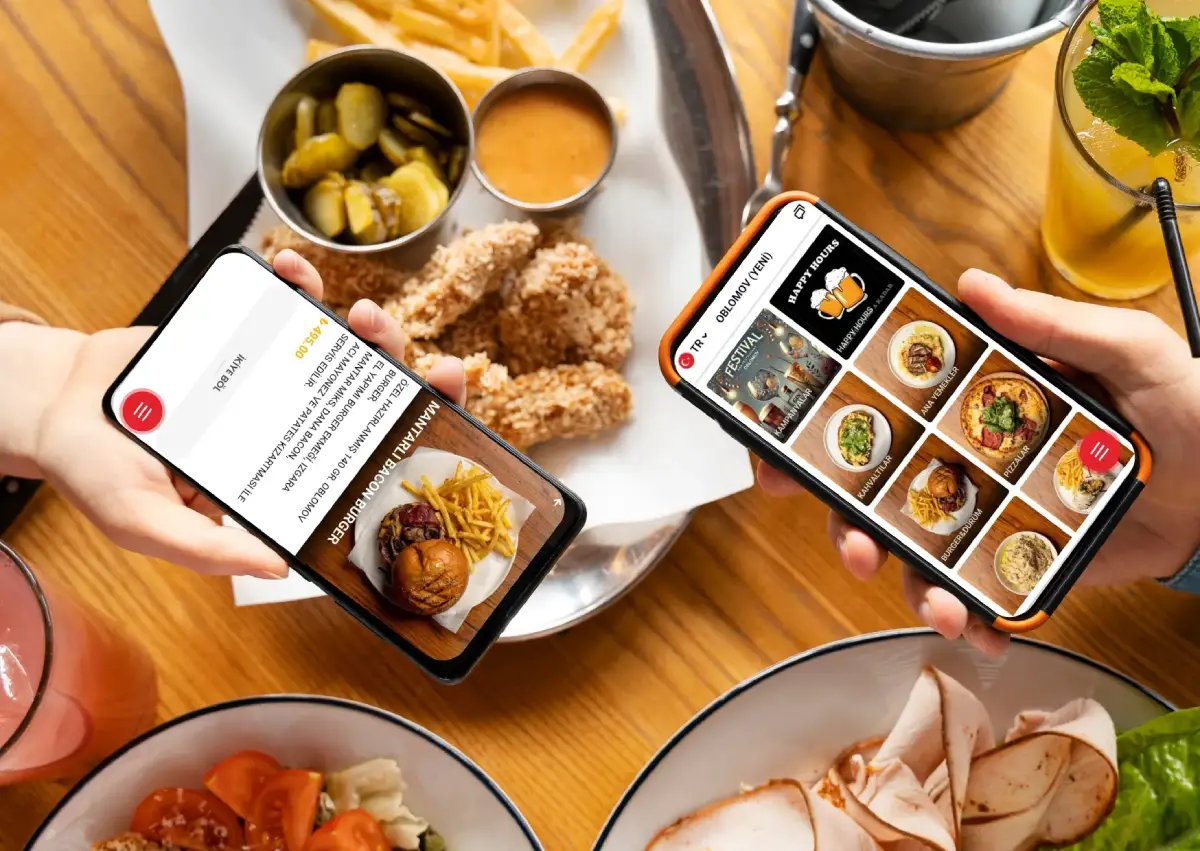
QR code-based ordering systems allow customers to view the menu, create orders, and in some systems make payments directly from their own phones without downloading any application. When these systems are integrated with the bill management software, customer orders are directly sent to the POS system, transmitted to kitchen screens, and automatically deducted from inventory.
In advanced QR Menu systems, unique QR codes can be created for each table. When a customer scans the QR code at the table, the order is directly assigned to that table. Different customers at the same table can place orders from their own phones and pay separately. This is especially useful for splitting bills in group settings.
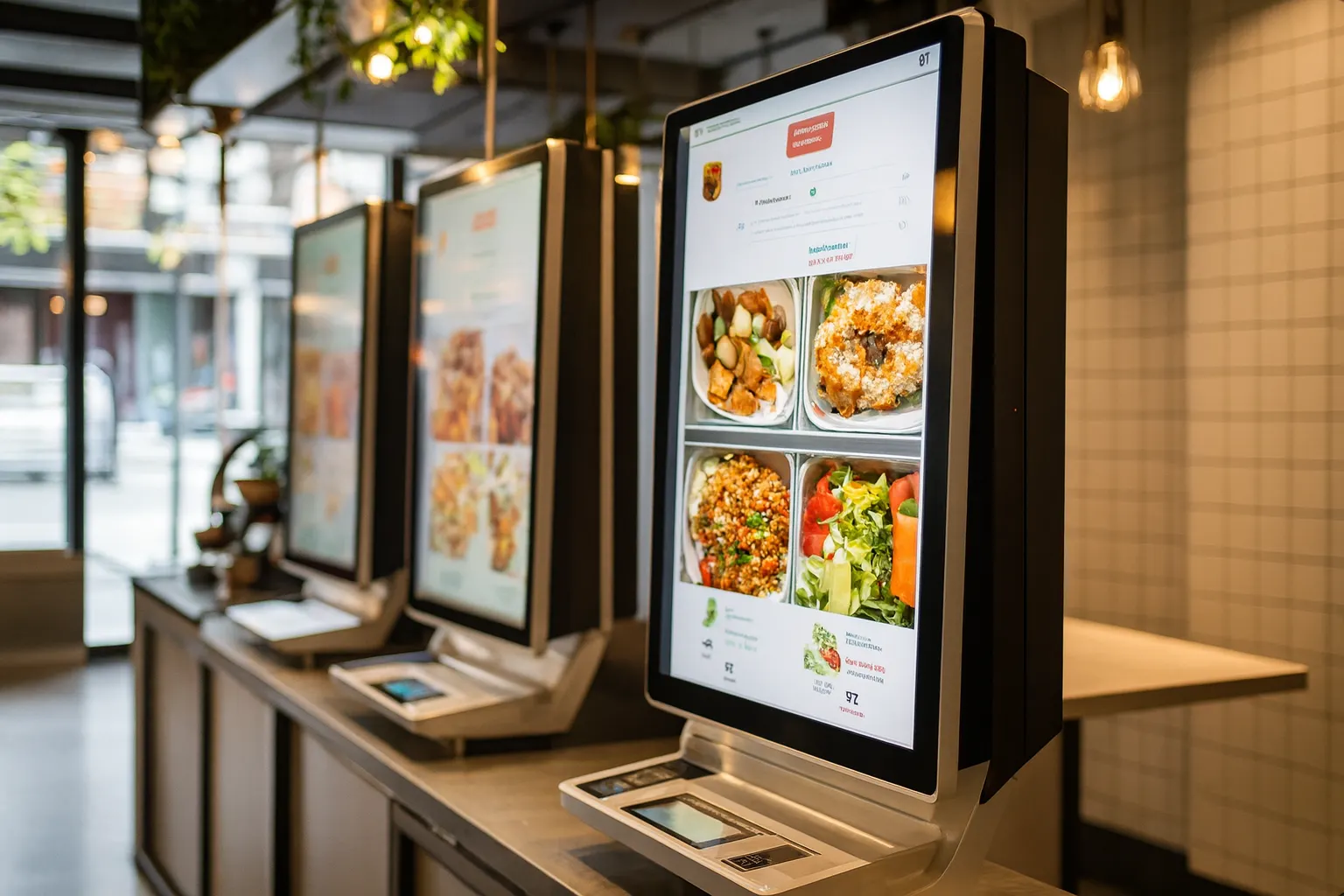
Self-service kiosks are solutions that increase operational efficiency, especially during peak hours. Customers can create their own orders, add or remove extra ingredients, benefit from promotions, and complete their payments. Thanks to kiosks integrated with bill management software, all orders are collected on a single platform and consistently transmitted to kitchen screens.
Modern bill management software consolidates multiple ordering channels (kiosk, QR menu, waiter handheld terminal, online ordering) into a single platform, ensuring that all orders are consistently delivered to kitchen displays.
4. Financial Compliance and Legal Requirements
E-Invoice and E-Bill Compliance
In Türkiye, digitalization in the food and beverage sector is no longer a choice but a necessity. The transition to an e-bill system for businesses offering table service has been mandated by the Revenue Administration (GİB).
E-Bill is a digital document created electronically instead of paper for tracking orders in food and beverage businesses such as restaurants, cafes, patisseries, and bars. This system, whose standards are determined by GİB, simplifies order tracking, reduces paper usage, and makes tax audits more transparent.
Your bill management software must be approved by GİB and fully compliant with e-invoice/e-bill regulations. The software must record the entire process electronically, from taking orders to closing the bill, store the created e-bill records electronically, and keep them accessible for audits when necessary.
If businesses within the scope of the obligation fail to transition to the e-bill system, they may face penalties for each document and additional sanctions during audits.
5. Reporting and Analysis Tools
Reporting features are indispensable for restaurant operators who want to make data-driven decisions. Sales reports show which products sell the most, peak hours, and waiter performance, revealing the strengths and weaknesses of the business.
Cost analysis tools help optimize menu planning and review pricing strategies by measuring sales costs and profitability. All critical actions (returns, complimentary items, price changes) are recorded. Only authorized personnel can perform transactions, eliminating discrepancies.
6. Technical Infrastructure and Security
Cloud-Based Systems and Uninterrupted Operation
Today, cloud-based systems are becoming the new standard in restaurant management. Secure data storage and access from anywhere with an internet connection provide great flexibility to business owners. Some systems can continue operating locally even during internet outages and synchronize data with the central system once the connection is restored.
Data Security and Technical Support
The security of customer and sales data, especially in credit card transactions, requires the use of software compliant with international security standards. In kiosk and QR menu systems, payment security should be ensured through end-to-end encryption and PCI-DSS compliance.
Additionally, the technical support services provided by the restaurant software provider are just as important as security. A support team that can provide quick solutions in case of issues ensures uninterrupted operations.
7. Cost and Suitability for the Business Model
Adaptation to Different Business Models
Cafe, bar, fine-dining restaurant, fast food, or chain business… Each has different needs. It is important that the chosen bill management software is flexible enough to adapt to the business model. For example, while kiosk systems are more critical for fast food restaurants, QR menu and mobile payment solutions may stand out in fine-dining restaurants.
Cost Evaluation
When choosing a bill management software, focusing only on the price tag can be misleading. What matters is how well the features meet the needs of the business. Software pricing is usually determined by monthly or annual subscription models. Some platforms offer free trials, while pricing for enterprise solutions is often customized.
The return on investment for kiosk and QR menu systems is often seen in a short time. Significant reductions in paper menu costs, increased staff efficiency, and improved order speed can be achieved. A good bill management software can provide tangible benefits such as increased profits, reduced labor costs, and lower cost of goods sold.
Conclusion
The right bill management software is a strategic investment that increases your restaurant’s efficiency, enhances customer satisfaction, and simplifies business processes. In addition to factors such as a user-friendly interface, strong integration capabilities, comprehensive reporting tools, and reliable technical support, features like cash register POS integration, compatibility with online ordering platforms, e-invoice/e-bill compliance, and data transfer to accounting software are becoming increasingly important.
Especially integration with QR menu and kiosk systems is one of the most critical factors providing a competitive advantage in modern restaurant management. Thanks to these systems, businesses can meet increasing customer expectations, improve staff efficiency, and reduce operational costs.
When choosing a bill management software for your restaurant, considering not only today’s but also tomorrow’s needs is crucial for long-term success.
Thousands of businesses in more than 20 countries are growing with Menulux. Contact us now to work with Menulux, which offers Türkiye’s leading POS Systems, Kiosk System, Restaurant Robot, QR menu, and digital menuboard solutions.


 Nida Kule, Atasehir Barbaros Mah.
 0850 346 6586
 info@menulux.com