MENULUX BLOG
Inventory Management That Increases Restaurant Profitability in 2025
Menulux POS Systems · September 23, 2025In restaurant management, inventory management is one of the unseen but most critical processes. According to research, 25–35% of food costs in restaurants are due to poor inventory management and insufficient inventory tracking systems (Toast, Food Cost Variance, 2025). A properly implemented inventory management system not only keeps costs under control but also increases customer satisfaction, reduces waste, and ensures the sustainability of the business.
In this guide, you can find everything you need to know step by step, from the basics of restaurant inventory management and creating inventory cards to the advantages of digitalization.

What Is Restaurant Inventory Management and Why Is It Important?
Inventory management is the process of controlling the journey of all ingredients in your kitchen from procurement to consumption. It is not just about answering “How many bags of flour are left in the warehouse?”; it involves creating an inventory card for each ingredient to track how much is used, when it will run out, and when it needs to be reordered.
Proper inventory management provides the following advantages:
Prevents food waste: Prevents excess products from spoiling and being thrown away.
Reduces costs: Prevents unnecessary purchases and protects your budget.
Shortens service time: Eliminates disruptions caused by missing ingredients.
Increases customer satisfaction: Menu items are always available.
For example, with a well-managed inventory system, the kitchen won’t face crises like “we ran out of cheese,” keeping both your staff and customers satisfied.
Common Mistakes in Restaurant Inventory Management
Restaurant inventory management may seem easy in theory, but small oversights and errors in practice can not only increase costs but also cause direct revenue loss, such as being unable to sell due to missing ingredients during peak hours.
Some of the most common mistakes in restaurants and cafes include:
Overstocking: Purchasing extra items thinking “we’ll need it anyway” can quickly spoil, especially fresh foods. Result? Wasted materials and money.
Overreliance on manual tracking: Keeping inventory with pen and paper or simple Excel sheets can inadvertently lead to significant discrepancies. Even a small typo can result in “missing” items by the end of the month.
Producing without recipes: If the amount of ingredients for each dish or drink isn’t clearly defined, usage varies uncontrollably. This complicates cost calculations and disrupts standard flavors.
Neglecting warehouse organization: Not following the FIFO (First In, First Out) principle allows old products to stay on shelves and spoil. Without organized storage, even the freshest ingredients can go to waste.
Cost and Waste Control with Recipe-Based Inventory Management and Inventory Cards
Recipe-based inventory management is one of the most powerful tools for controlling both costs and waste in businesses that use inventory tracking systems. Its core principle is clearly defining the amount of ingredients specified in the recipe for each menu item within the system.
With this system:
The ingredients used for each prepared product are automatically deducted from inventory.
The system alerts you when minimum stock levels are reached.
Waste rates are significantly reduced.
For example, if a pizza uses 120 grams of mozzarella, this amount is defined in the recipe. Each time a pizza is made, 120 grams is deducted from the inventory card. When your cheese stock reaches a critical level, a “Cheese stock low” warning appears. This allows you to reorder before running out and avoid excess stock.

6 Steps for Successful Digital Inventory Management and Inventory Card Use in Restaurants
Successful inventory management is more than just counting ingredients. To ensure the process works correctly, certain steps must be applied consistently. When followed regularly, inventory management creates impact not only in the kitchen but also in your overall business profitability.
Keep records of stock in and out: Every product entering the warehouse and every item used in the kitchen should be recorded in the system, giving a clear view of movement.
Define recipes in inventory cards: Standard portion sizes for each menu item should be set in the system. This is crucial for both cost control and flavor consistency.
Set minimum stock levels: Critical stock levels should be defined for each ingredient. When reached, the system automatically alerts you, giving a chance to reorder before stock runs out.
Conduct regular inventory counts: Weekly or monthly checks compare system data with actual stock, allowing quick identification of losses or errors.
Review performance reports: Analyzing sales and consumption data reveals which items are profitable and which generate waste, enabling data-driven optimization of your menu and stock planning.
4 Effective Ways to Reduce Waste in Restaurants with Digital Inventory Management
Waste in the kitchen not only increases costs but also negatively impacts operational efficiency. Here are ways to turn inventory management into a powerful tool to boost profitability.
Standardize portion control: Clear ingredient amounts for each dish ensure flavor consistency and prevent overuse. Digital recipe systems simplify this process.
Perform weekly consumption analyses: Review how much of each ingredient is used weekly. This prevents unnecessary stock and reduces spoilage risk.
Plan seasonal menus: Out-of-season ingredients are both expensive and spoil faster. Planning your menu around seasonal items provides a significant advantage in cost and waste control.
Create creative side dishes with leftover ingredients: For example, unused vegetables from salads can be used in the soup of the day. This reduces waste and adds variety to your menu.
Fast and Error-Free Solutions with Digital Inventory Management and Inventory Cards
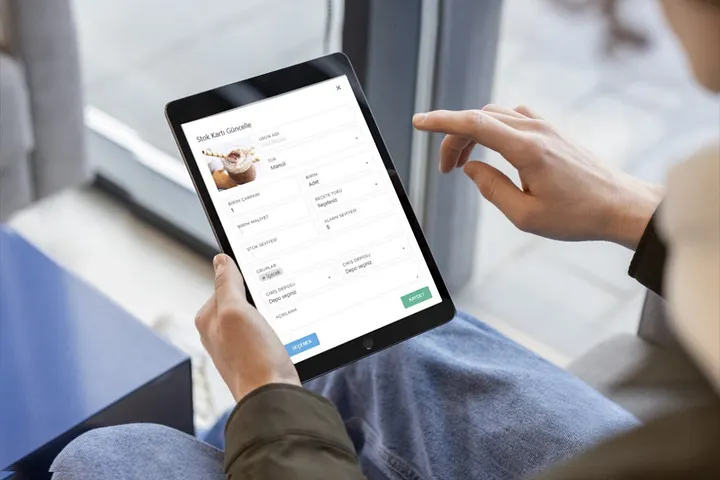
Traditional manual inventory tracking is time-consuming and prone to errors. In digital inventory management systems, each product has its own inventory card containing unit size, supplier information, purchase price, and recipe link.
Case studies show that restaurants and hotels integrating digital inventory systems achieved an average 15% reduction in waste and a 20% increase in operational efficiency. (TotalCtrl, 2023)
Creating an inventory card for each product is mandatory in digital inventory tracking. These cards include the product name, unit size, purchase price, and supplier information. Then, every product entering the warehouse is entered via an entry slip, and every used ingredient is logged through the recipe or exit slip. When daily sales are integrated with the POS System, ingredients in recipes are automatically deducted from stock, minimizing the need for manual counts. Regular stock counts compare system data with physical inventory to correct any discrepancies.
Using a digital system, you can:
Receive instant alerts when minimum stock is reached: Take action before ingredients run out and prevent sales loss.
Generate automatic order lists based on past consumption: Place accurate orders by knowing which ingredients are used and how often.
Easily track stock transfers between branches: Instantly see and transfer items missing at one branch from another.
Access stock status from phone, tablet, or computer: Monitor kitchen inventory from anywhere.
How Digital Inventory Management and Inventory Cards Increase Restaurant Profitability
Traditional inventory tracking is insufficient in the fast-paced, highly competitive restaurant industry. Paper or Excel checks waste time and increase error risk.
Digital inventory management provides three main advantages:
Cost control: Prevents unnecessary purchases and protects your budget.
Reduced waste: Minimizes ingredient waste.
Organized and efficient kitchen: All processes are recorded, providing full transparency.
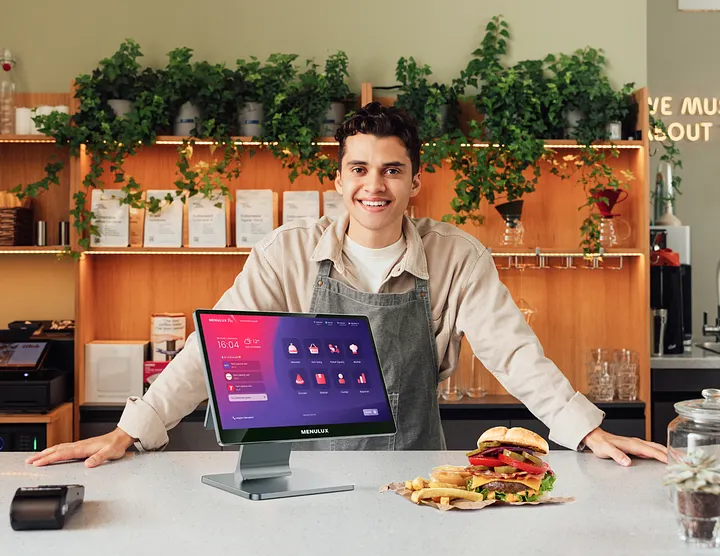
Menulux Inventory Tracking Software allows you to manage all inventory processes in your restaurant from a single screen, instantly and accurately.
Features like recipe-based stock deductions, automatic order lists, inter-branch transfers, and mobile access are all integrated in one place.
This ensures 100% transparency and maximum efficiency both in the kitchen and at the cash register. Remember: inventory management is not just counting ingredients; it’s a strategic process that directly affects your profitability.
Discover Menulux Inventory Tracking Solution today and manage the entire process from raw material to cost from a single screen. Start reducing costs not tomorrow, but today.





 Nida Kule, Atasehir Barbaros Mah.
 0850 346 6586
 info@menulux.com